
Drug Sales and Distribution Charges in San Diego
California treats the sale and distribution of controlled substances far more harshly than simple possession. A possession case may be a misdemeanor with a diversion path; a sales case is a felony with years of custody exposure, charged aggressively in San Diego County, where proximity to the border keeps narcotics enforcement well funded. Cases that begin as a traffic stop or a small undercover buy can grow quickly once agents obtain phones, warrants, and cooperating witnesses.
It is also a category of case where accusations outrun the evidence. People are charged with possession for sale based on nothing more than the quantity they carried, how it was packaged, or a narcotics officer's opinion. The charge is only the prosecution's theory — it still has to survive scrutiny of how the evidence was gathered and what it actually proves.
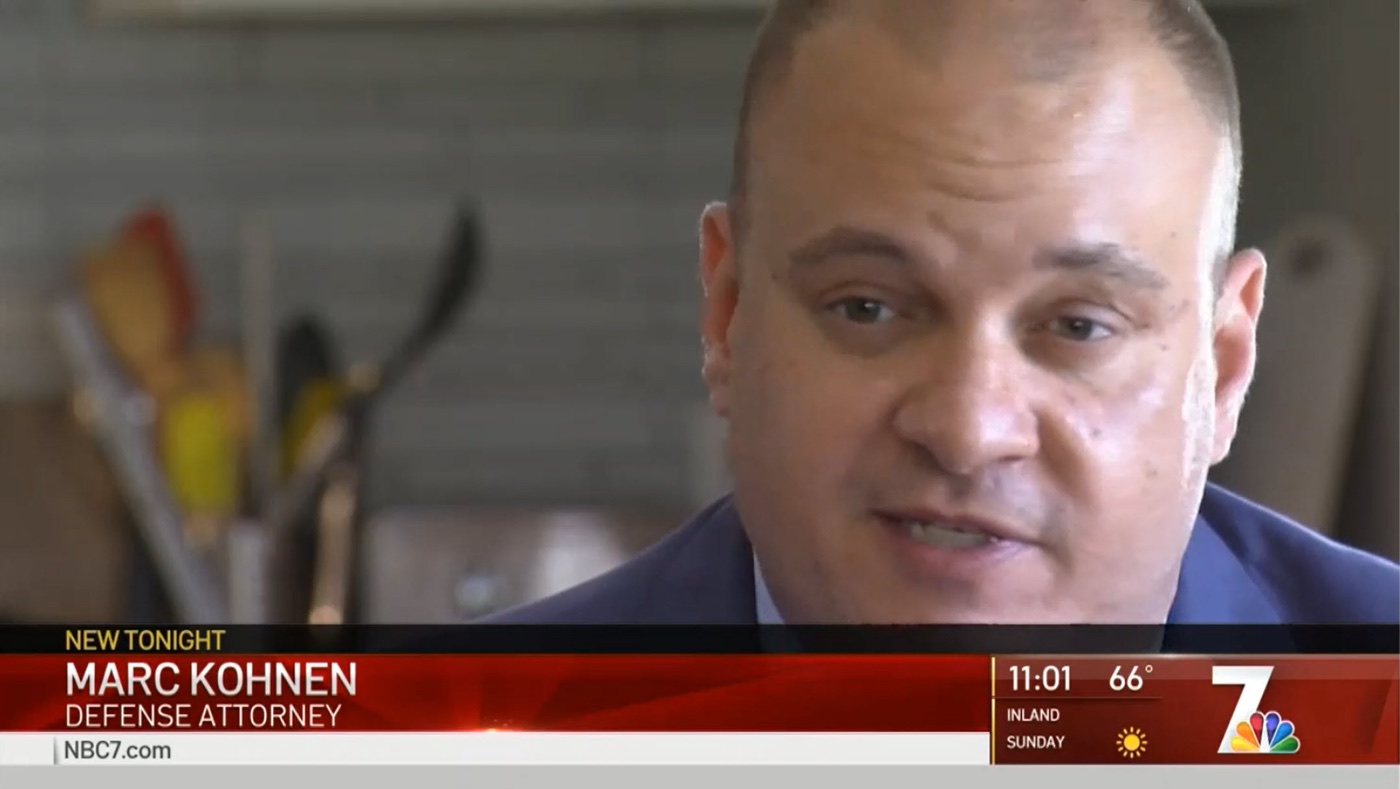
Marc Kohnen has defended drug cases in San Diego for more than a decade, in both state and federal court. Law Office of Marc S. Kohnen begins every sales case the same way: with a close review of the stop, the search, the warrant, and the chain of events that put the drugs in front of a judge. Which charge you face — and how much time it carries — turns on several factors:
- The type of controlled substance involved
- Whether the case is filed in state or federal court
- The quantity of the substance and any weight-based enhancements
- Your prior record and any alleged aggravating conduct, such as sales involving minors
The Statutes: HS 11351, 11352, 11360, 11378 and 11379
California's drug sales laws are spread across several sections of the Health and Safety Code, and the differences between them matter. Health and Safety Code 11351 makes it a felony to possess certain controlled substances — including heroin, cocaine, and many prescription opioids — with the intent to sell them. No sale has to occur; the crime is complete when the prosecution can prove possession plus intent, and intent is usually inferred from circumstances such as quantity, packaging, scales, cash, pay-owe records, or text messages.
Health and Safety Code 11352 covers the conduct itself — selling, furnishing, administering, giving away, or transporting for sale a controlled substance. It carries a longer sentencing range than 11351, and transporting drugs between noncontiguous counties within California exposes a defendant to an aggravated range that can reach nine years on a single count. Since a 2014 amendment, transportation under this section generally requires that the movement be for purposes of sale, so personal-use transport should not, by itself, support an 11352 conviction.
Methamphetamine and most other stimulants are charged under parallel statutes: Health and Safety Code 11378 for possession for sale and 11379 for sale or transportation for sale, with somewhat different sentencing ranges and the same aggravated exposure for noncontiguous-county transport.
Marijuana is treated separately under Health and Safety Code 11360. After Proposition 64, unlicensed sale or transport for sale of marijuana is in most cases a misdemeanor for adults, but it can still be charged as a felony in certain circumstances — for example, specified prior convictions, sales involving minors, or attempts to move marijuana across state lines. And because marijuana remains a controlled substance under federal law, conduct licensed under California law can still draw federal attention, particularly near the border.
Which statute the district attorney selects determines the sentencing range, whether probation is realistically available, what enhancements can attach, and what the conviction will mean for immigration and licensing. Part of defending these cases is forcing the prosecution to charge what the evidence actually supports rather than the most aggressive theory available.
Enhancements: Weight, Priors and Aggravating Conduct
The base sentence is often only the starting point. Under Health and Safety Code 11370.4, cases involving heroin, cocaine, or cocaine base at kilogram-scale weights carry additional consecutive years on top of the base term, on a sliding scale that grows with the quantity — at the highest tiers, the enhancement alone can exceed the base sentence several times over. A parallel provision applies weight enhancements in large methamphetamine cases. In any case involving substantial weight, the enhancement allegations deserve as much attention as the underlying count, because that is frequently where most of the exposure sits.
Prior-conviction enhancements have changed significantly. Health and Safety Code 11370.2 once added three years for each prior drug sales conviction. Senate Bill 180, effective in 2018, sharply narrowed that enhancement: it now applies only to a limited category of priors involving the use of minors in drug offenses. Many people charged today assume their priors add time that current law no longer imposes, so the enhancement allegations in the complaint should be checked against the law as it stands now — getting this right can change a negotiation substantially.
Other allegations can also raise the stakes: sales to minors or using a minor in sales activity, sales near schools or certain protected locations, and firearm allegations when a gun is found alongside the drugs. Each is a separate allegation the prosecution must plead and prove — and a separate target for the defense.
What Sentencing Actually Looks Like: PC 1170(h) and Probation
Since California's realignment law, most felony drug sales sentences are served in county jail under Penal Code 1170(h) rather than in state prison, and a portion of the term can often be structured as mandatory supervision in the community rather than straight custody. Defendants with prior serious or violent felony convictions, or certain other disqualifying factors, remain prison-eligible, so the same charge can mean very different things for different people.
Probation is another area where the law has recently moved. For years, California barred probation outright in many sales cases involving specified drugs, quantities, or prior sales convictions; Senate Bill 73, effective in 2022, repealed most of those categorical bans, so probation is now legally available in most sales cases — though it remains a discretionary decision the court has to be persuaded to make. The diversion programs that resolve many simple possession cases with a dismissal, by contrast, are generally not available for sales or possession-for-sale counts. This is one of the most important reasons charge reduction matters: a case resolved as simple possession can open doors that a sales conviction closes permanently.
Marc's approach to sentencing exposure is to break the case down allegation by allegation — the count, each enhancement, each probation-limiting factor — and pressure every piece separately. A case that looks like a fixed number of years on the complaint often looks very different once the enhancements are challenged and the charging theory is tested against the evidence.
How Distribution Cases Are Built — and Where They Break
Sales and distribution prosecutions are rarely built on a single moment. They are assembled, sometimes over months, from layers of investigation — and understanding those layers is the first step in taking the case apart.
Many cases start with an informant — often someone working off their own charges — who identifies a target and arranges purchases. Law enforcement then runs controlled buys: recorded, surveilled transactions using marked funds, frequently repeated to build multiple counts. Larger investigations add wiretaps, GPS trackers, pole cameras, and long-term surveillance. When arrests come, phones are seized and extracted; text threads, call logs, and location history often become the backbone of the intent evidence. In San Diego, state and local officers routinely work alongside the DEA and Homeland Security Investigations through joint border-region task forces, so even a state case may rest on federally gathered evidence.
Every one of those layers is a point of attack. Informants have credibility problems and incentives that juries are entitled to hear about. Controlled buys depend on procedures — searches of the informant before and after, unbroken surveillance, proper handling of recordings — that are not always followed. Wiretaps require detailed judicial authorization and a showing that ordinary techniques were inadequate; defects in the application can suppress everything the tap produced. Phone extractions must stay within the scope of the warrant. And the drugs themselves must move through a documented chain of custody from seizure to lab to courtroom. Cases that look overwhelming on the arrest report often depend on a small number of these links holding up.
The State-Federal Line
San Diego sits on one of the busiest land borders in the world, and that shapes drug enforcement here. When a case involves large quantities, cross-border movement, or an organization rather than an individual, it can be charged federally under 21 U.S.C. 841 instead of in state court. The difference is significant: federal drug statutes carry mandatory minimum sentences triggered by drug type and quantity, federal sentencing guidelines drive outcomes in ways state law does not, and pretrial release is harder to obtain.
Marc practices in both the San Diego Superior Court and the United States District Court for the Southern District of California, which matters in border-region cases where the two systems overlap. If your case is federal or at risk of going federal, see our federal defense pages for a fuller discussion of how those prosecutions work.
Defense Approaches in Sales and Distribution Cases
There is no single defense to a distribution charge — the right approach depends on how the case was made. But most defenses in these cases come from a familiar set of pressure points.
Suppression is often the front line. If the stop that started the case lacked reasonable suspicion, if the search exceeded what the law allows, or if a warrant was issued on a deficient or misleading affidavit, the evidence flowing from those defects can be excluded — and a sales case without its drugs, its cash, or its phone data frequently cannot proceed. Marc files and litigates these motions where the facts support them.
In sting and informant-driven cases, entrapment can be a genuine issue: California law does not permit law enforcement to induce a crime that a normally law-abiding person would not have committed. Where the government's conduct crossed that line — repeated pressure, appeals to sympathy, extraordinary incentives — the defense is worth developing.
In possession-for-sale cases, the fight is often over intent. The prosecution typically relies on a narcotics officer testifying, as an opinion witness, that the quantity and packaging indicate sales. That opinion can be challenged: quantity consistent with heavy personal use, packaging with innocent explanations, the absence of scales or pay-owe sheets. Undermining that inference can move a case from an 11351 sales count to simple possession — which changes everything, because simple possession opens the door to diversion and non-conviction outcomes that sales counts foreclose.
Beyond that, every case gets the fundamentals: chain-of-custody scrutiny of the drugs and lab work, credibility investigation of any informant, and a hard look at whether the prosecution can tie the drugs to the client rather than to a location or another person. Where trial is not the right path, that same work drives negotiation — reduced counts, dismissed enhancements, resolutions structured to limit custody and collateral damage. What is achievable depends on the facts, but the case the prosecution files is rarely the case that has to be resolved.
Collateral Consequences: Immigration, Licensing and Beyond
For non-citizens, the collateral consequences of a drug sales conviction can be more severe than the sentence itself. Federal immigration law generally treats drug trafficking offenses as aggravated felonies — a classification that can mean near-certain deportation, permanent inadmissibility, and the loss of most forms of relief, regardless of how long someone has lived in the United States or what family ties they have. Any non-citizen facing a sales or distribution charge needs the immigration consequences analyzed before any plea is considered, and resolutions must be structured with those consequences in mind.
Citizens face collateral consequences too: professional license discipline, exclusion from certain employment, and a felony record that follows every background check. Part of defending a distribution case well is defending the client's life after the case — which is why the difference between a sales conviction, a possession conviction, and a dismissal is worth fighting over even when the custody exposure seems manageable.
Common Questions About Drug Distribution Charges
These are questions clients ask most often at the start of a sales or distribution case. Every case turns on its own facts — treat these as orientation, not advice.
Can a possession-for-sale charge be reduced to simple possession?
Often, yes — where the facts support it. The difference between HS 11351 or 11378 and simple possession is intent to sell, and intent is proved by inference: quantity, packaging, and an officer's opinion. When those inferences are weak or explainable, prosecutors can be persuaded, or juries convinced, that the case is possession only. That reduction matters because simple possession can qualify for diversion programs that end with no conviction at all, while sales counts generally cannot.
Do the police have to catch me selling to convict me?
No. Possession for sale under HS 11351 and 11378 requires no completed transaction — the prosecution only needs to prove you possessed the substance intending that it be sold. That is why these cases so often rest on circumstantial evidence and officer opinion testimony rather than an observed sale, and why challenging those inferences is central to the defense. Conversely, under HS 11352 and 11379, conduct like furnishing or giving drugs away can be charged even when no money changed hands.
Will a drug sales conviction affect my immigration status?
Almost certainly, and severely. Trafficking-type convictions are generally treated as aggravated felonies under federal immigration law, which strips away most defenses to deportation and bars most paths back. If you are not a United States citizen, do not accept any plea in a drug case until the immigration consequences have been specifically analyzed — the structure of the plea can determine whether removal follows.
My case involves the border or a large quantity — will it go federal?
It might. Quantity, cross-border movement, and involvement of federal agencies like the DEA or HSI are the usual triggers for federal charging under 21 U.S.C. 841, which carries mandatory minimum sentences at certain quantity thresholds. There is no bright-line rule; charging decisions are made case by case. Because Marc handles cases in both the state and federal courts in San Diego, the defense does not have to change hands if the case changes systems. Contact Law Office of Marc S. Kohnen for a free consultation to discuss where your case stands and what can be done about it.
More on Drug Crimes
- Drug Possession. Simple possession through possession-for-sale — fighting the charge and the record.
Back to the Drug Crimes overview.
Legally reviewed by Marc S. Kohnen, Attorney at Law, State Bar of California #255303, defending San Diego since 2008.
Free, confidential case evaluation, available 24 hours at (619) 398-2500.