
If you were arrested for driving under the influence in San Diego, the most useful thing anyone can tell you in the first week is that two clocks are running and only one of them is obvious. The criminal case will take months, and you will get notice of every date. The DMV case has already started, and it gives you ten days from the day of your arrest to demand a hearing before your license is suspended without one. Nobody is required to remind you.
The second useful thing is that the outcome is not decided. DUI cases are built almost entirely out of technical evidence — the basis for the stop, the administration of field sobriety tests, the calibration of a breath instrument, the handling of a blood vial — and every one of those is documented, discoverable, and challengeable. What happens in your case depends a great deal on whether someone examines that record.
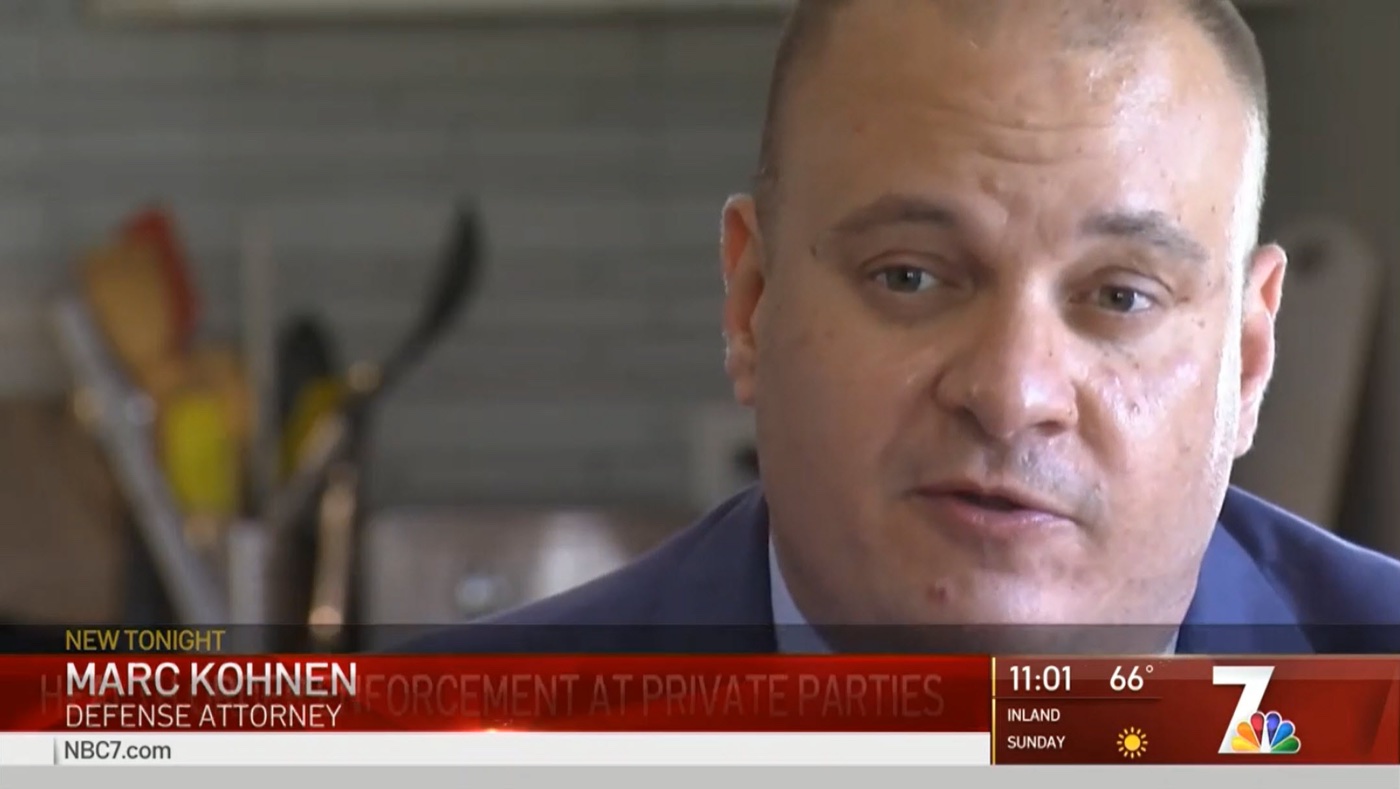
Marc Kohnen has been defending DUI cases in San Diego County since 2008, in every courthouse in the county, and he has taken DUI cases to jury verdict. He reviews every case personally.
The Ten-Day DMV Deadline
When you were arrested, the officer took your license and gave you a pink Order of Suspension and Temporary License. That document is the opening of an administrative action against your driving privilege, and it runs on its own track, independent of anything the District Attorney does.
You can win the criminal case and still lose your license, because the two proceedings ask different questions under different standards. Requesting the DMV hearing within ten days preserves your right to contest the suspension at all, and it lets you ask for a stay so the suspension does not begin while the hearing is pending. It also opens the department's file, which is where a defense usually starts.
What You Are Actually Charged With
A standard DUI is filed as two counts under the same statute, and understanding why matters:
- Vehicle Code 23152(a) — driving under the influence, meaning your ability to drive with the caution of a sober person was impaired. No specific number is required
- Vehicle Code 23152(b) — driving with a blood alcohol concentration of 0.08 percent or more, which requires no proof of impairment at all
Two Counts, Two Different Weaknesses
They are charged together because they fail in different ways. A problem with the chemical test — a calibration gap, a Title 17 violation on a blood draw, a missed observation period — undercuts the 0.08 count while leaving the impairment count standing on the officer's observations. Poor documentation of the field sobriety tests undercuts the impairment count while the number stands on its own.
A real defense has to address both, and you can only be sentenced on one of them. The thresholds also change with the driver: 0.04 percent for a commercial license, and 0.01 percent for a driver under 21 under the zero tolerance law.
What a First Offense Carries
Under Vehicle Code section 23536, a first-offense misdemeanor DUI carries a range of 96 hours to six months in county jail — at least 48 hours of it continuous — and a fine of $390 to $1,000, though penalty assessments and fees typically push the real figure past $2,000. In practice, a first offense without aggravating facts is rarely resolved with custody. It is normally resolved on probation, and the probation terms are what actually affect your life: three to five years of probation under Vehicle Code section 23600(b)(1), the conditions set under section 23538 including a licensed DUI program, a court-imposed license suspension separate from the DMV's, and ignition interlock requirements.
Certain facts change that picture and need to be handled deliberately — a BAC of 0.15 percent or higher, a refusal allegation, a child under 14 in the car, a collision, excessive speed, or a commercial license.
Where DUI Cases Are Won
Very little in a DUI case turns on whether you are a good person having a bad month. These cases turn on the record, and the record has recurring weak points:
- The stop — a traffic stop requires a lawful basis, and a stop made on a hunch or on a violation that did not occur is challengeable
- Field sobriety tests — standardized exercises with specific administration requirements that officers do not always follow, and which many sober people cannot perform well
- Breath testing — a fifteen-minute observation period, a trained operator, and an instrument with current accuracy and calibration records, all of which are documented
- Blood testing — Title 17 of the California Code of Regulations governs the draw, the preservative, the seal, and the storage, and compliance is provable or it is not
- Rising alcohol — absorption takes time, so a test taken an hour after driving does not establish what your BAC was behind the wheel
- The report itself — written by a person who can be subpoenaed and questioned about what it says, and increasingly contradicted by body-worn camera footage
Diversion Is Not Available for DUI — With One Exception
You may read that California's judicial diversion law lets a judge divert a misdemeanor and dismiss it. That is true for many misdemeanors and it is not true for DUI. Vehicle Code section 23640 bars diversion in DUI cases, and California appellate courts have confirmed that the 2021 judicial diversion statute did not override that bar.
The exception is real and it is worth raising immediately. Current and former members of the military with a service-related condition may qualify for military diversion under Penal Code section 1001.80, which expressly includes misdemeanor DUI and can end the case in a dismissal. If you served, say so at the first meeting.
When a DUI Stops Being a Misdemeanor
Four things turn a DUI into a felony: an injury to another person under Vehicle Code section 23153, a fourth offense within ten years under section 23550, any DUI following a prior felony DUI within ten years under section 23550.5, and a death, which is charged as vehicular manslaughter or in some cases as murder.
The felony filing decision is frequently contestable, and where it rests on a wobbler like section 23153 the realistic objective is often reduction to a misdemeanor rather than acquittal. Causation is where injury cases turn — a DUI arrest at the scene of a collision does not establish that the intoxication caused it.
What Marc Handles
Marc takes DUI cases across the full range, and the DMV case alongside the criminal one, because the evidence in each shapes the strategy in the other.
- First-offense and repeat misdemeanor DUI
- Felony DUI, including injury cases and fourth offenses
- DMV administrative hearings and license reinstatement
- Chemical test refusal allegations
- DUI of drugs, cannabis, and prescription medication
- Underage and zero tolerance cases
- Commercial driver's license DUI
- Cases involving a collision, a child passenger, or an alleged injury
Call Before the Ten Days Run Out
The parts of a DUI case that reward early work are the parts with deadlines and the parts built on evidence that degrades. The DMV request is due within ten days. Body camera footage, surveillance video, instrument maintenance records, and witness memory all get harder to obtain from the first week onward. Cases that resolve well are usually the ones where the requests went out immediately.
Consultations are free and confidential, and the line is answered 24 hours. Call (619) 398-2500 — if you are within the ten-day window, say so when you call.
Questions About DUI & DWI Charges
How long do I have to request a DMV hearing after a DUI arrest in San Diego?
Ten days from the date of the arrest, counting weekends. The pink Order of Suspension the officer handed you is both your temporary license and the notice that the clock is running. The request goes to the DMV Driver Safety Office, not the court, and it should include a request for a stay so the suspension does not begin while the hearing is pending. Miss the ten days and the suspension takes effect automatically, no matter how the criminal case turns out.
Will I go to jail for a first-offense DUI in San Diego?
Vehicle Code section 23536 allows up to six months in county jail, but a first offense with no collision, no injury, no refusal and a blood alcohol level under 0.15 percent is normally resolved on probation without custody beyond the time already served at booking. The terms of that probation (a licensed DUI program, fines and penalty assessments, a court-imposed license restriction and, in many cases, an ignition interlock) are what actually shape the next year of your life. Aggravating facts change the picture and need to be dealt with directly.
Can a San Diego DUI be reduced to a wet reckless?
Sometimes. A wet reckless under Vehicle Code section 23103.5 is a reckless-driving conviction that notes alcohol was involved. It carries lower fines, a shorter program and no mandatory court-ordered suspension, and it is the most common negotiated outcome when the evidence is close: a borderline blood alcohol level, a weak stop, or a problem with the chemical test. It still counts as a prior if there is another DUI within ten years, and the DMV suspension is decided separately, so a reduction in court does not by itself save the license.
Do I have to blow into the breathalyzer?
There are two different tests and the answer is different for each. The handheld roadside test before arrest is voluntary for adult drivers who are not on DUI probation, and you can decline it. The chemical test after arrest, breath or blood, is required under California's implied consent law, Vehicle Code section 23612. Refusing it triggers a one-year license suspension that survives even a dismissal of the criminal case, adds a refusal allegation to the charge, and can still leave the prosecution with an impairment case built on the officer's observations.
How long does a DUI stay on my record in California?
A DUI conviction counts as a prior for ten years, so a second offense within that window carries the enhanced penalties of Vehicle Code section 23540 even if the first case was years ago. The DMV keeps the conviction on your driving record for ten years as well. After probation ends, a dismissal under Penal Code section 1203.4 can clear the conviction for most employment purposes, but it does not erase the prior for a future DUI, and it does not remove the DMV entry.
More on DUI & DWI
- DMV Hearings. Ten days to demand a hearing under VC §13558 — or the suspension takes effect without one.
- First Offense DUI. VC §23536 penalties, probation terms, and where a first-offense case is actually won.
- Felony DUI. Injury, a fourth offense in ten years, or a prior felony DUI — state prison exposure under VC §23153 and §23550.
- Chemical Test Refusal. VC §23612 implied consent — a one-year suspension that outlives a dismissal, and how refusals are challenged.
- DUI of Drugs. No legal limit means the People must prove real impairment — cannabis, prescriptions and the DRE evaluation.
- Underage DUI. Zero tolerance at 0.01% under VC §23136 — a one-year suspension with no conviction required.
Legally reviewed by Marc S. Kohnen, Attorney at Law, State Bar of California #255303, defending San Diego since 2008.
Free, confidential case evaluation, available 24 hours at (619) 398-2500.